
Intermediate Ballet Steps for Beginners: Building on the Basics
Have you already gained some experience in ballet and are familiar with fundamental movements like plié, tendu, or relevé? Then it’s time to take your training to the next level. The following intermediate ballet steps for beginners help you develop more control, balance, and musicality, building directly on your foundational skills.
If you’d like to refresh the basics first, we recommend checking out our post “10 Foundational Ballet Steps for Beginners”, which lays the groundwork for all the movements discussed here.
1. Petit Battement
Petit Battement describes a quick, small movement of the working leg back and forth along the supporting leg. This step is executed slightly differently depending on the ballet tradition.
In the Russian (Vaganova) tradition, the working leg usually moves from coupé over sur le cou-de-pied, guiding the foot and ankle clearly through the entire motion. In RAD (Royal Academy of Dance) or British training, petit battement is often performed simply from coupé devant to coupé derrière, without the intermediate sur le cou-de-pied step, keeping the movement compact and rhythmically clear. Many American schools combine both approaches, often keeping the leg at sur le cou-de-pied to emphasize speed, control, and visible lines.
All variations train precision, footwork, and stability in the supporting leg, with each tradition placing slightly different technical emphasis.
2. Pas de Bourrée
The pas de bourrée is a fluid transitional step consisting of three small movements: usually en arrière (back), à la côté (to the side), and en avant (forward). It is used to connect movements gracefully, change directions, and create smooth transitions between larger steps or jumps.
In RAD training, the pas de bourrée is often performed softly and close to the floor, while in the Russian (Vaganova) tradition, the movement is clearer, more precise, and slightly larger. Many American schools focus on rhythm and expression, with slight variations in step sequence depending on the combination.
The pas de bourrée is a versatile step that appears frequently in both classical exercises and combinations and is particularly important for the coordination of legs, feet, and upper body.
3. Glissade
Glissade literally means “to glide” and describes a flowing step along the floor. The glissade begins with a dégagé, lifting the working leg from the floor, glides lightly across, and ends when both feet come together, usually in a closed position such as first or fifth.
The glissade is an important connecting step, training control, balance, and musicality, and is often used as preparation for jumps or more complex combinations.
4. Piqué
Piqué literally means “prick” and refers to a quick, precise step in which the working leg lightly taps the floor with the straightened foot before lifting again. Usually, it starts from a plié or another position, and the fast contact with the floor develops control, balance, and a clear transfer of weight.
5. Sauté
Sauté is a simple vertical jump from various foot positions. While it looks straightforward, it requires proper coordination of plié, take-off, and landing. In all classical systems, sauté is considered a fundamental step for later jumps, with slight variations in emphasis and dynamics depending on the style.
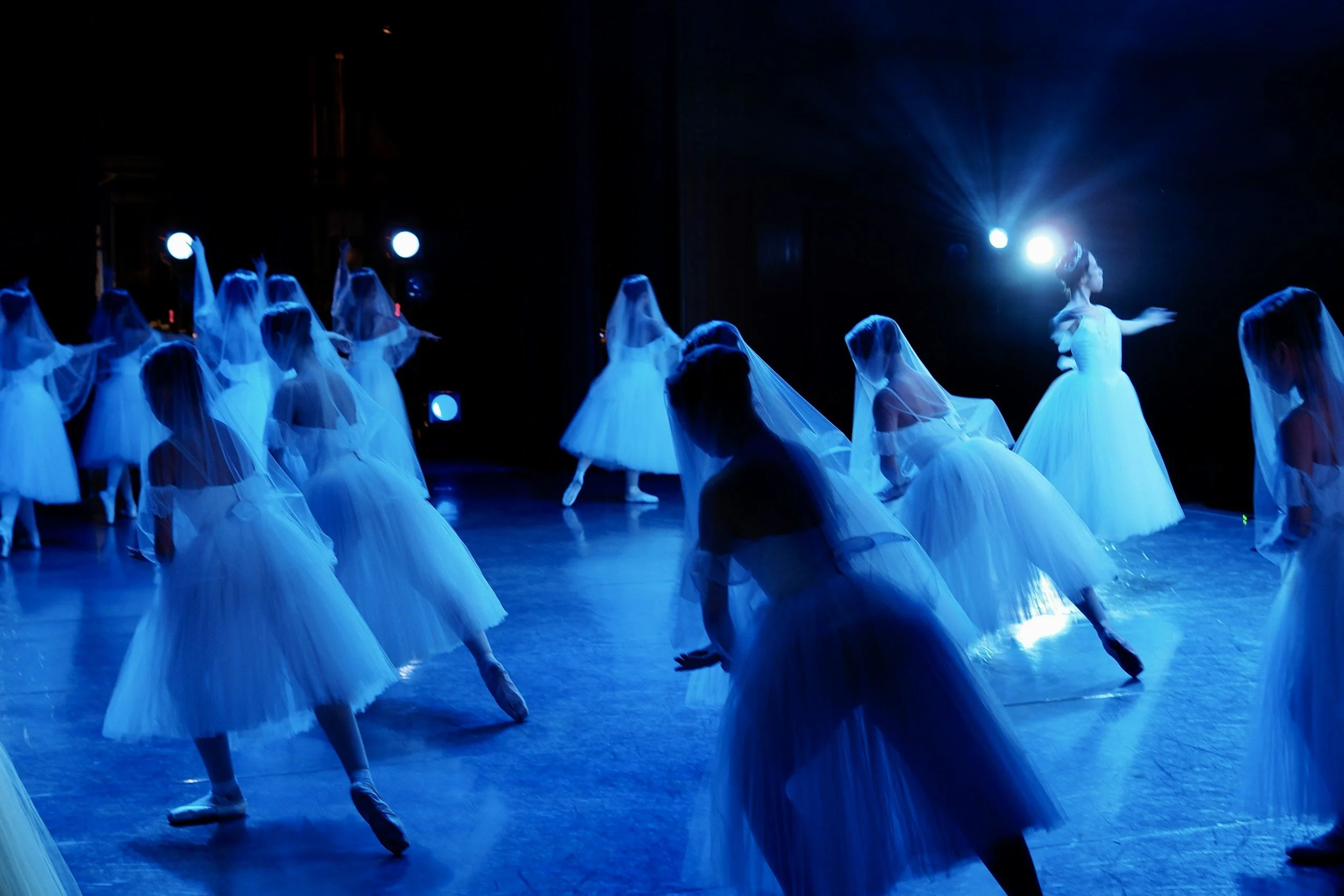
Don’t just want to read about these steps—want to truly learn them? In our ballet classes in Graz, we teach these movements with a focus on clean technique and individual development.
6. Passé / Retiré
Passé originally describes the movement in which the working leg is drawn up along the supporting leg from coupé until the foot passes the knee of the supporting leg. The knee is turned out, keeping the hip open and creating an elegant line. Retiré refers to the held position, where the foot rests firmly at the supporting knee and balance is maintained.
In the Vaganova method, this distinction is taught strictly: Passé is the movement, Retiré is the position. In RAD training, the position is officially called Retiré, but teachers often use “Passé” informally because it’s simpler and more familiar for students. Many American schools and other studios do the same: Passé is often used as a general term for the knee position, regardless of the exact style.
Regardless of terminology, this movement is central to balance exercises, pirouettes, and classical combinations. It trains stability, control, and proper alignment for turns and jumps.
7. Port de Bras
Port de bras describes the conscious movement of the arms in coordination with the upper body and head. Arm movements give the dance expression and support the lines of the body. While some systems teach very clear, defined arm paths, others emphasize softness and flow – both contribute to the overall quality of movement.
8. Changement
Changement is a small jump in which the feet switch positions in the air. Usually, it starts from fifth position, with the front leg moving back and the back leg moving forward before both feet land cleanly. This step requires precise footwork, timing, and control in the air. Changement is an essential step for jump combinations and classical exercises, training balance, precision, and line awareness.
9. Pirouette Preparation
Tombé literally means “to fall” and describes a step where the weight is shifted forward, backward, or to the side in a controlled way. Pirouette preparation combines tombé, pas de bourrée, plié, and passé/retiré and requires a stable core.
Often, the preparation starts with a tombé that shifts the weight forward, then flows into a pas de bourrée, bringing the body into fourth position in demi-plié – a classical starting point for the actual turn. Depending on the step sequence and exercise, pirouettes can also start from fifth or second position, depending on music, style, or desired difficulty.
10. Assemblé
Assemblé literally means “to assemble.” In this step, both feet come together in the air and land simultaneously. Assemblé combines strength, precision, and musicality and is often used to create elegant jump combinations or transitions between movements.
Learn Ballet in Graz
Ballet thrives on solid technique, good guidance, and regular practice. In our ballet classes in Graz, we teach beginners in a supportive atmosphere – whether you’re starting out or deepening your foundations.
Discover our ballet classes in Graz and dance with us to develop your technique, musicality, and joy of movement!